伝統芸能
Traditional Theater
Noh, Kabuki, Bunraku — three magnificent theatrical traditions that have enthralled audiences for centuries.
Noh, Kabuki, Bunraku — three magnificent theatrical traditions that have enthralled audiences for centuries.
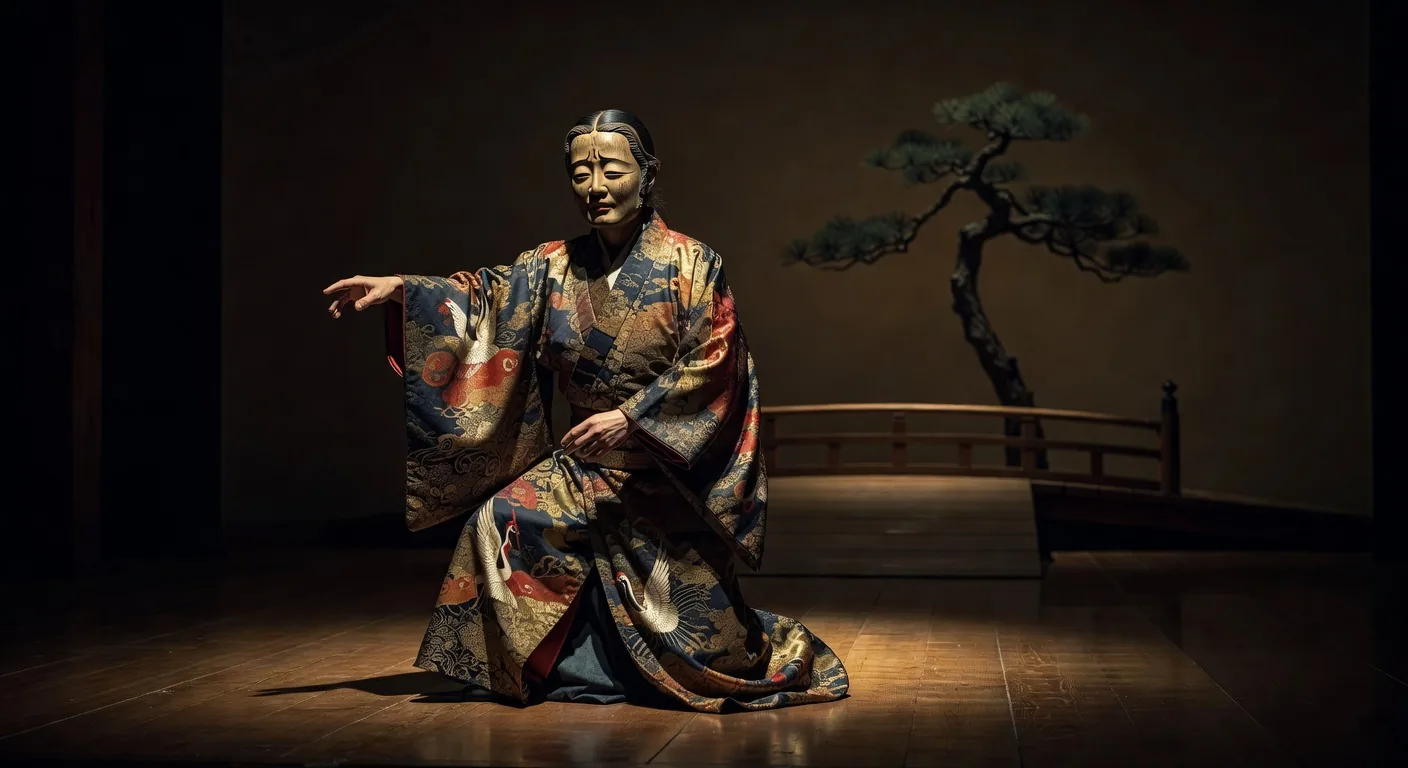
Noh is the world's oldest continuously performed professional theater tradition, developed in the 14th century by the master Zeami Motokiyo under the patronage of the Ashikaga shogunate. It is a theater of extreme restraint and profound depth.
A Noh performance unfolds with extreme slowness and deliberate economy of movement. The shite (main actor) wears a carved wooden mask and moves in highly stylized, minimally choreographed patterns on a bare cedar stage. Music is provided by a chorus, flute, and hand drums.
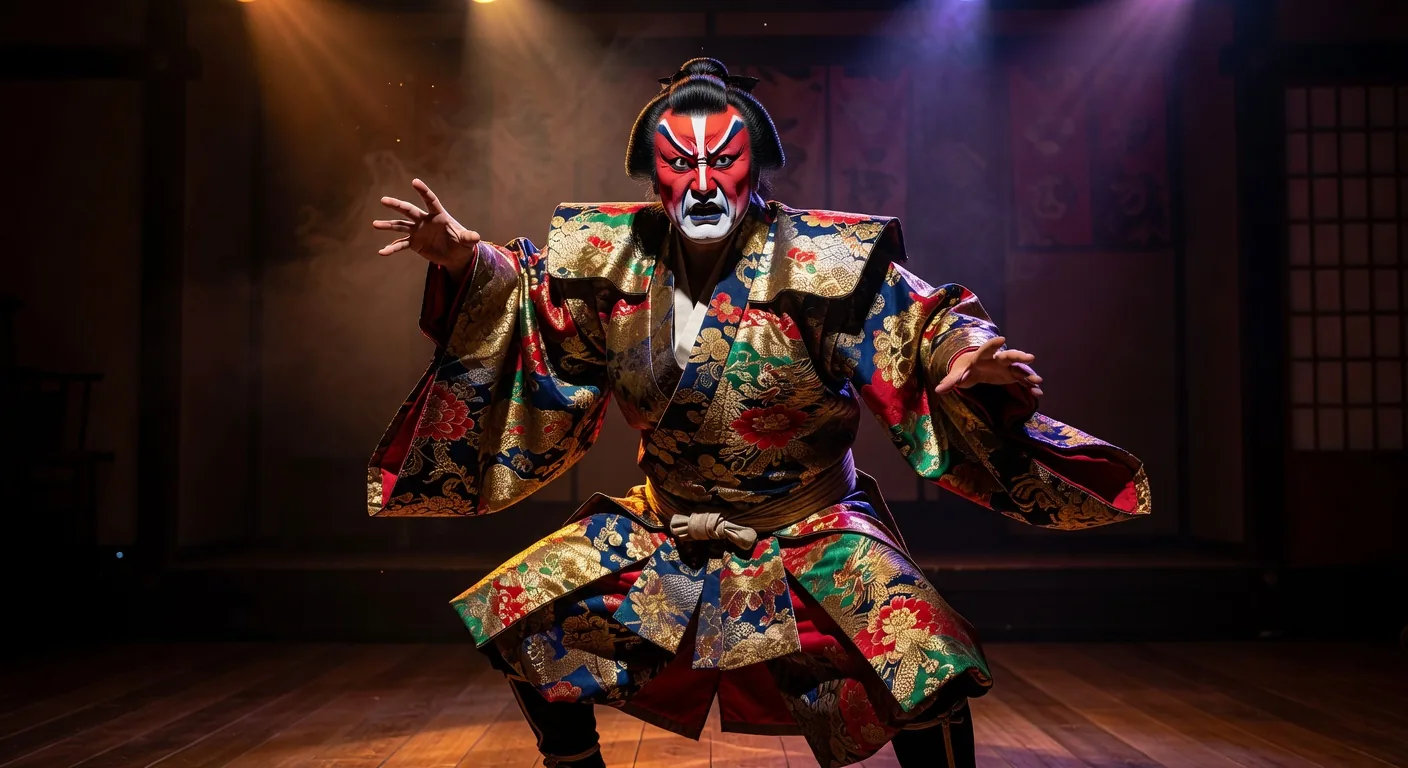
Where Noh was the theater of the aristocratic elite, Kabuki was born in the early 17th century as entertainment for Edo's vibrant merchant class. It is theater at its most spectacular — extravagant costumes, dramatic makeup (kumadori), acrobatic staging, trap doors, and revolving stages.
The iconic kabuki makeup uses bold lines of red (representing heroism and passion) and black (evil and supernatural powers) painted over white chalk-like base. These painted expressions codify character and emotion in an immediately legible visual language.
Kabuki was originally performed by women, then exclusively by men — a tradition maintained today, where female roles (onnagata) are played by male specialists of extraordinary grace and skill. Major kabuki theaters operate in Tokyo (Kabukiza), Kyoto (Minamiza), and Osaka (Shochikuza).
Bunraku puppet theater, developed in Osaka in the 17th century, is recognized by UNESCO as an Intangible Cultural Heritage. Each puppet stands approximately two-thirds of human height and is operated by three puppeteers — the chief puppeteer (who controls the head and right arm), the left arm operator, and the leg operator.
The puppeteers are trained for decades and are visible on stage throughout the performance, dressed entirely in black. Yet such is the skill of experienced manipulators that audiences forget the human operators entirely and experience the puppets as living beings.
The plays (often written by the great dramatist Chikamatsu Monzaemon) deal with themes of duty versus emotion (giri and ninjo), love, sacrifice, and the tragic consequences of human passion — themes that continue to resonate profoundly today.
"In Japanese theater, the actor does not become the character — the character moves through the actor, like wind through an empty vessel."— Zeami Motokiyo, Kadensho (c.1400)