和食
Traditional Japanese Cuisine
Washoku — UNESCO Intangible Cultural Heritage — where every dish tells the story of season, place, and philosophy.
Washoku — UNESCO Intangible Cultural Heritage — where every dish tells the story of season, place, and philosophy.

In 2013, UNESCO recognized washoku (traditional Japanese cuisine) as an Intangible Cultural Heritage of Humanity — not for its flavors alone, but for the deep cultural values embedded in every aspect of its preparation and presentation.
Washoku is inseparable from the Japanese relationship with nature. The cuisine is profoundly seasonal, with ingredients changing as the year turns, and it reflects the aesthetic principles of simplicity, restraint, and reverence for natural flavors over culinary transformation.
The concept of umami — the fifth taste discovered by Japanese researcher Kikunae Ikeda in 1908 — transformed global understanding of flavor and is central to washoku's distinctive depth.
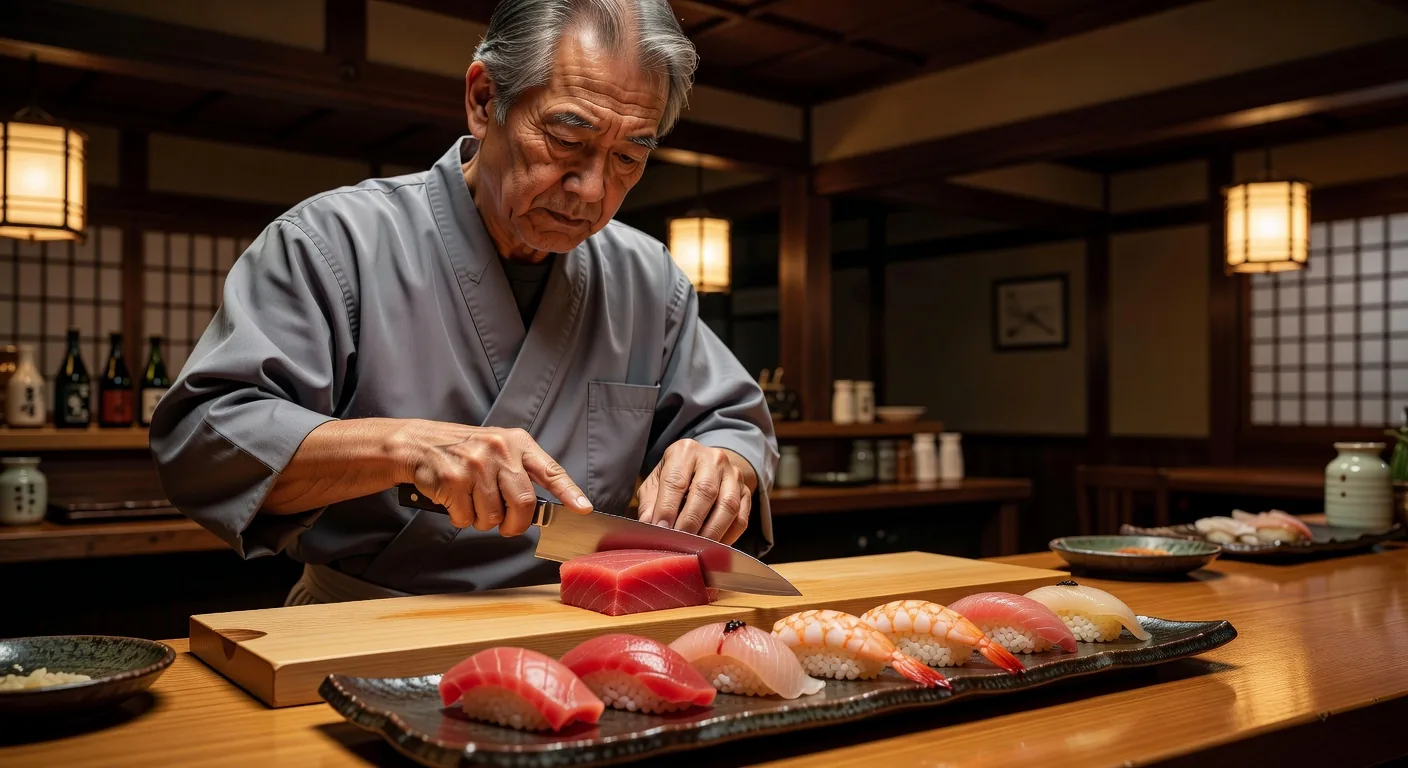
Vinegared rice combined with fresh seafood, vegetables, or egg. The art of nigiri sushi requires years of training — particularly in hand pressure and rice temperature — and is governed by strict professional protocols in high-end establishments.
Japan's fundamental cooking stock, made from kombu seaweed and katsuobushi (dried bonito flakes). Dashi is the invisible backbone of Japanese cooking — the source of umami that underlies soups, sauces, and countless dishes. Its preparation is considered a fundamental cooking skill.
Thin noodles made from buckwheat, eaten cold with dipping sauce or hot in broth. Hand-made soba (te-uchi soba) is considered a high culinary art. Eating soba on New Year's Eve (toshikoshi soba) symbolizes cutting away the troubles of the old year.
Japan's sophisticated multi-course formal dining tradition, evolved from the simple meal served at the tea ceremony. Kaiseki presents seasonal ingredients in a sequence of small, exquisitely presented dishes that tell the story of the season.
Traditional pickled vegetables, fermented or preserved in salt, rice bran, miso, or vinegar. Every region of Japan has its distinctive pickle styles. Essential at every traditional meal, tsukemono provide balance, textural contrast, and probiotic benefits.
Japanese confections made from plant-based ingredients — bean paste, mochi rice, agar, and seasonal botanicals — are elevated to fine art in wagashi. Each piece is a miniature seasonal landscape, paired with bitter matcha to balance sweetness.
Shun — the peak season of each ingredient — is central to Japanese culinary philosophy. Each season brings its own treasured flavors.
Bamboo shoots (takenoko), cherry blossom (sakura) flavors, young greens (sansai), fresh clams, and bittersweet warabi bracken fern.
Edamame, cool soba and somen noodles, fresh eel (unaju), water shrimp, and chilled tofu with ginger and bonito flakes.
Matsutake mushrooms, Pacific saury (sanma), sweet chestnuts (kuri), kabocha pumpkin, new rice (shinmai), and salmon.
Nabe hot pots with crab and seafood, yellowtail (buri), konbu-rich oden stew, root vegetables, and warming sake.
"Japanese food is not simply nourishment — it is a meditation on impermanence, an offering of gratitude, and a conversation with the seasons."— Fresh Flower Corner