着物
Traditional Clothing
The kimono and its world — where fabric, color, pattern, and season combine in a profound language of self-expression.
The kimono and its world — where fabric, color, pattern, and season combine in a profound language of self-expression.
The word kimono literally means "thing to wear" — yet it is far from ordinary. The kimono is a living repository of Japanese aesthetics, social codes, and artistic traditions. Each element — the fabric, the pattern, the color combination, the manner of tying the obi (sash) — communicates season, occasion, and the wearer's relationship to the world.
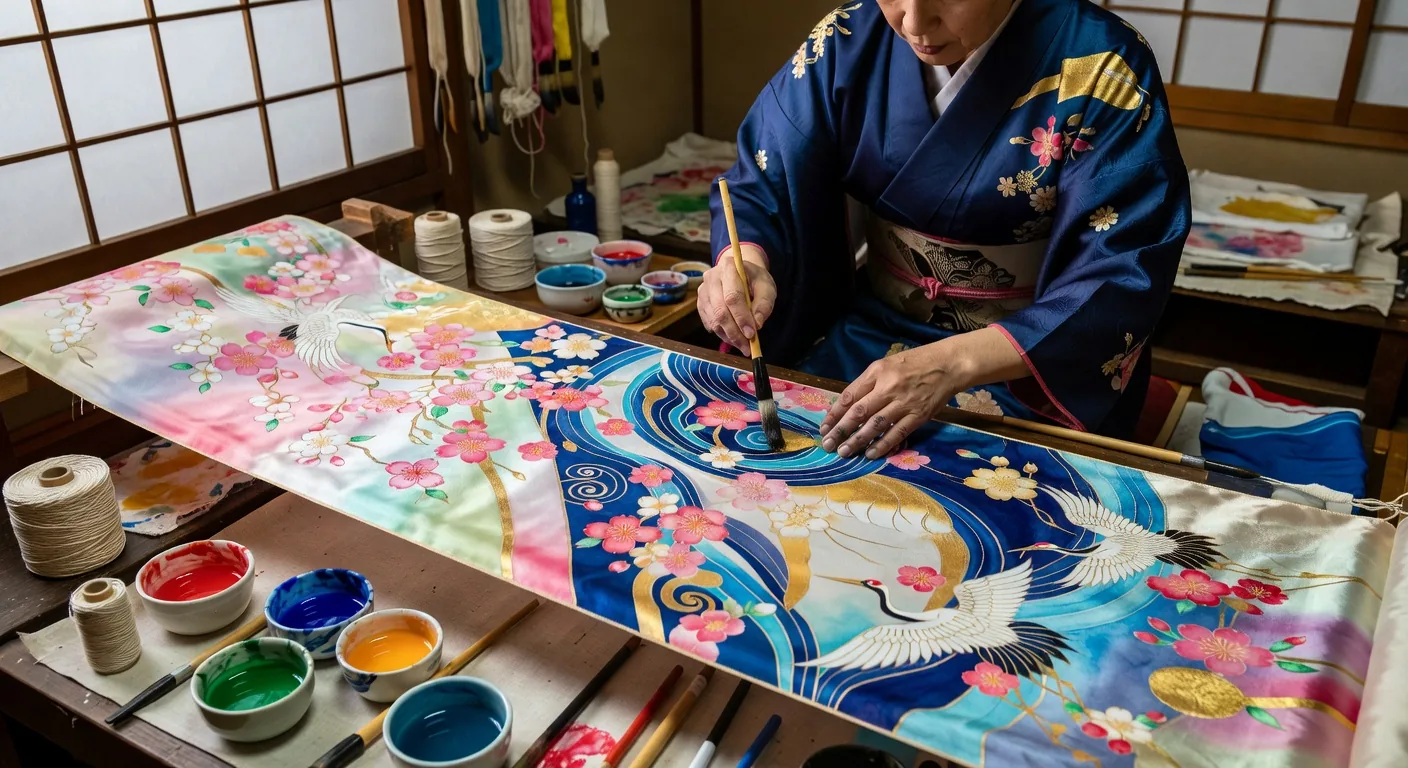
A single formal kimono may require dozens of hours of expert labor to weave, dye, and embroider, and may represent an investment comparable to a fine work of art. The masterpieces of Nishijin weaving in Kyoto or Kaga Yuzen dyeing are among Japan's highest textile achievements.
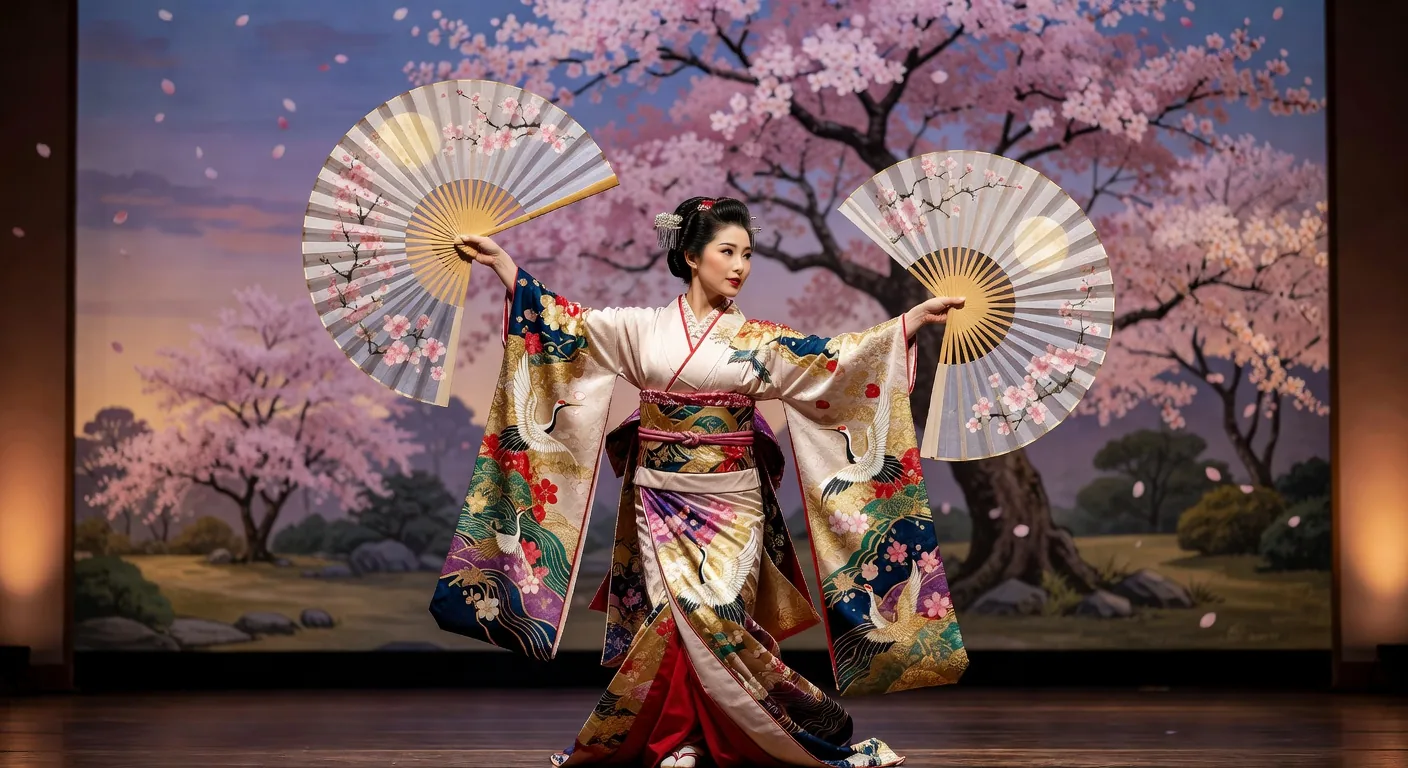
Japanese clothing has a sophisticated hierarchy of formality. The correct kimono type is chosen according to the wearer's age, marital status, and the occasion.
The most formal kimono for married women, featuring family crests (mon) and elaborate patterns only on the lower portion. Black tomesode (kuro tomesode) is worn at formal wedding receptions by the mothers of the bride and groom.
Distinguished by their long, swinging sleeves, furisode are the most formal kimono for unmarried young women. Worn at Coming-of-Age ceremonies (Seijin no Hi), graduation ceremonies, and formal events. Rich, colorful patterns on all surfaces.
One of the most versatile women's kimono, appropriate for tea ceremony, formal parties, and ceremonies. Patterns flow continuously across seams from the shoulder to the hem, creating a unified pictorial design when worn.
The most formal men's ensemble, combining a black kimono with family crests, a haori jacket, and wide pleated trousers (hakama). Worn at weddings, funerals, and New Year ceremonies. The male counterpart to a formal suit.
A light cotton summer kimono, the most accessible form of traditional Japanese dress. Worn at summer festivals, fireworks displays, and ryokan inns. Simple to wear, available in beautiful patterns, and beloved by people of all ages.
Wide pleated trousers (originally samurai wear) now worn by both men and women for graduation ceremonies, martial arts practice, and shrine maidens (miko). The female hakama with a bright red color is iconic at university graduation.
Freehand paste-resist dyeing developed in Kyoto in the 17th century. Known for its incredibly vivid colors and pictorial designs of flowers, birds, landscapes, and classical scenes painted directly onto silk.
Japanese tie-dyeing — fabric is folded, twisted, bound, or clamped before dyeing to create patterns. Hundreds of distinct shibori techniques exist, producing everything from small scattered dots to large geometric or organic forms.
Kyoto's famous woven silk textile tradition, producing richly patterned fabrics for kimono and obi on specialized Jacquard looms. The most prestigious textile in Japan, with some patterns requiring months to set up on the loom.
The wide decorative sash tied around the waist. The obi is often more valuable than the kimono itself, and its knot style (musubi) is a distinct art form with hundreds of named variations.
The white silk underlayer worn beneath the kimono, with a decorative collar (han-eri) that shows at the neckline. Its neckline exposure is a key aesthetic element.
Decorative hairpins worn with formal kimono, ranging from simple silver pins to elaborate seasonal pieces with hanging flower and butterfly ornaments in silk, coral, jade, and lacquer.
Traditional wooden clogs (geta) or flat silk sandals (zori) worn with kimono. White tabi socks with a split toe are worn with all traditional footwear. The height and style of footwear varies by formality level.
"The kimono communicates without words — season, occasion, lineage, and intention — in a visual language understood by generations."— Fresh Flower Corner