伝統工芸
Traditional Crafts
The artisan traditions of Japan — where centuries of accumulated skill meet materials shaped by the landscape itself.
The artisan traditions of Japan — where centuries of accumulated skill meet materials shaped by the landscape itself.
In Japanese culture, the skilled artisan occupies a position of deep respect. The concept of shokunin — a master craftsperson who has dedicated their life to a single discipline — embodies a philosophy of total commitment, endless refinement, and the humble service of one's craft.
Japan recognizes exceptional traditional craftspeople as Ningen Kokuho — Living National Treasures — and supports them as irreplaceable custodians of cultural knowledge. These artisans are required to transmit their skills to successors, ensuring continuity of traditions that might otherwise be lost.
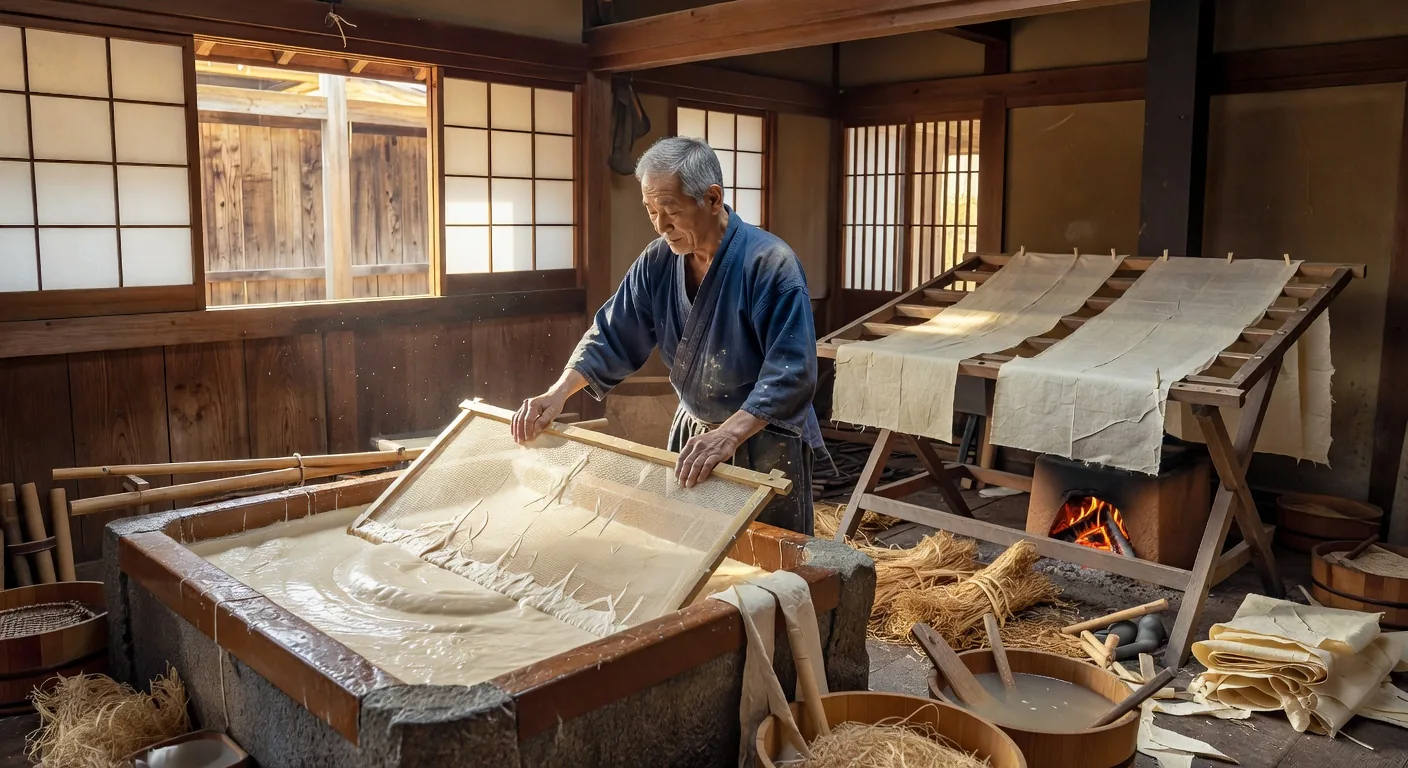
Washi is handmade paper crafted from the fibers of kozo (paper mulberry), mitsumata, and gampi plants. Listed as a UNESCO Intangible Cultural Heritage, washi is renowned for its extraordinary durability — washi documents from the 8th century survive to this day — and its tactile, luminous beauty.
Washi papermakers immerse their craft in the cycle of seasons, harvesting plant fibers in winter and relying on cold, clean water from mountain streams. The paper is formed by hand on wooden frames in a process that has changed little in 1,300 years. Washi is used in shoji screens, lanterns, calligraphy, bookbinding, and conservation of art worldwide.
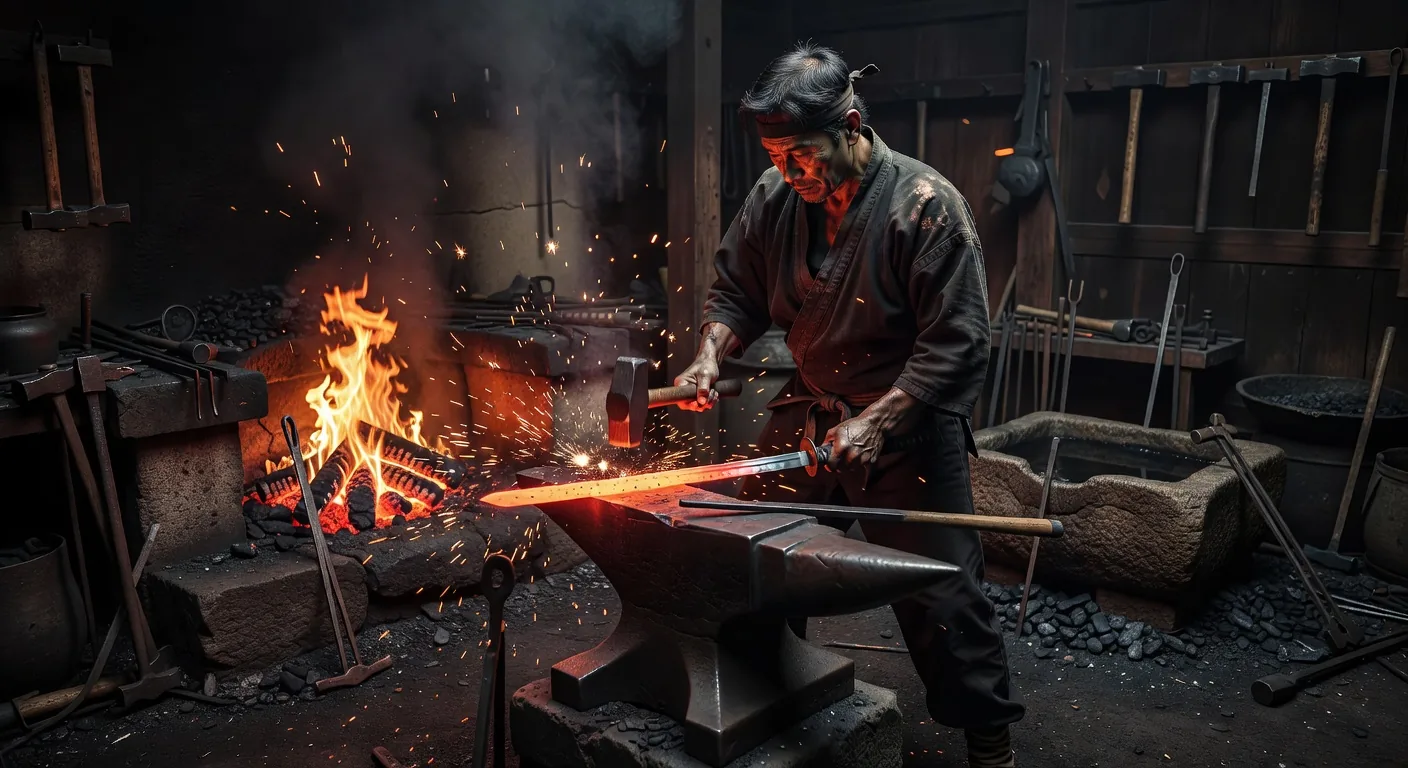
The Japanese sword (katana) is widely considered the finest edged weapon ever produced by human craftsmanship. Its manufacture is a rigorous craft requiring the master swordsmith (tōshō) to fold and forge high-carbon tamahagane steel hundreds of times, creating a blade of extraordinary sharpness, flexibility, and beauty.
A single sword may require months to complete. The laminated structure — a hard cutting edge bonded to a tough, flexible core — solves engineering challenges that Western metallurgy did not achieve until the industrial age. The visual signature of a Japanese blade — its crystalline hamon (temper line) — is an aesthetic achievement as much as a technical one.
Japanese lacquerware (shikki) uses the sap of the urushi tree (Rhus verniciflua), applied in dozens of thin layers over a wooden, bamboo, or fabric base. Each layer must dry in carefully controlled humidity conditions before the next is applied — building up a surface of extraordinary depth, hardness, and luminosity over months or years.
Techniques such as maki-e (sprinkling gold and silver powders onto wet lacquer to create pictorial designs) produced objects of dazzling beauty. Major lacquerware centers include Wajima (Ishikawa Prefecture) and Kyoto, where the tradition remains alive and vigorous.
Japan's ceramic traditions are among the world's most diverse and distinguished, ranging from the rustic, rough-surfaced tea bowls of the wabi aesthetic to the delicate painted porcelain of Arita (Imari ware) that profoundly influenced European ceramics in the 17th and 18th centuries.
Different regional kiln traditions — Bizen, Shigaraki, Hagi, Kutani, Mashiko — each have distinctive clay bodies, glazing styles, and aesthetic philosophies. The tea ceremony created an intense demand for handmade ceramics and elevated the craft to the level of high art.
Bamboo craft encompasses a vast range of objects — baskets, flower containers, tea implements, furniture, fencing, and architectural elements — produced by master weavers who split bamboo stalks into ribbons of extraordinary precision and weave them into forms of great structural and aesthetic complexity.
The finest bamboo baskets (hanakago) used in the tea ceremony are considered works of art comparable to paintings. Major centers include Beppu (Oita Prefecture) and Kyoto, where traditional bamboo craftsmanship coexists alongside contemporary design innovation.
Japan's system of recognizing and supporting exceptional traditional artisans ensures the survival of irreplaceable knowledge.
Since 1950, Japan has designated outstanding traditional artists and craftspeople as "Holders of Important Intangible Cultural Properties" — popularly called Living National Treasures. They receive government stipends to support their practice and a legal obligation to transmit their skills.
Every Living National Treasure is required to actively teach apprentices, ensuring that their knowledge — often passed down through family lineages or formal apprenticeships of 10–20 years — does not die with them.
Japan's craft traditions are not museum pieces — they are living practices evolving with each generation while maintaining core techniques and aesthetic values. Young artisans are finding new audiences and applications for ancient craft knowledge worldwide.
"The Japanese artisan does not ask 'how long will this take?' They ask only 'how perfect can this be?' — and then they spend the rest of their life finding out."— Fresh Flower Corner